Swords · Rider–Waite–Smith
Is the Ten of Swords a Yes or No?
The Ten of Swords is a No upright and a Maybe reversed. The figure is face down; this version of events is over. Reversed, the worst has bottomed, and getting up is a new question.
Yes No Tarot card library · Published 2026-10-21 · Updated 2026-11-15
Upright
Reversed
The homepage reading draws the 22 Major Arcana, so this Minor card is not in that deck. Use this page when the card appears in a full 78-card reading, or ask your question and see which majors come up.
Upright in a yes or no reading
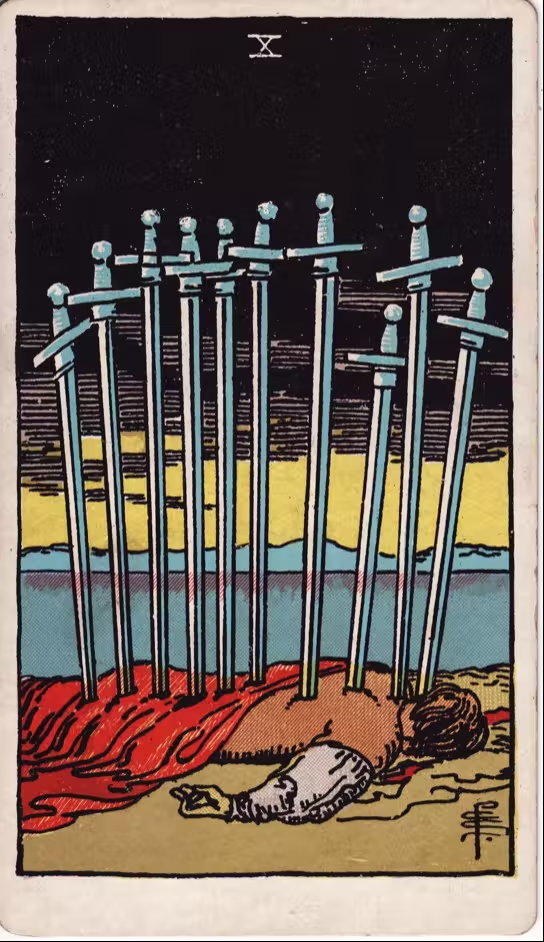
A body lies under ten swords. The sky is black and a yellow dawn shows at the edge. Upright Ten of Swords is an ending that feels like ruin: a betrayal, a failure you cannot spin, a role that is dead. The leaning is No for continuing as before. The dawn is in the picture so you do not mistake the no for the end of you. It is the end of this. Do not pull the swords out in public to prove how bad it was. Let the overkill teach you that the situation is finished, not that you are. If you are unsafe, leave the symbol and get help. The card is not a threat and not a wish.
Reversed in a yes or no reading
Reversed, the body stirs or the extra swords are seen as excessive. Survival, the drama put down, a recovery that starts low. Maybe. You can rise, and you cannot rise into the same plan. The maybe applies to a next chapter. It does not reanimate the contract, the marriage, or the identity that the ten swords ended. Take the dawn as permission to be alive and ordinary. Refuse anyone who needs you to stay on the ground so the story stays large.
Love
Upright is a No to the relationship in its current corpse. A painful ending, sometimes a betrayal. Reversed is a Maybe only for a life after that ending, not for reassembling it because the dawn made you lonely. If both people are still face down, you do not have a reunion. You have a shared ruin. Stand up separately first.
Career
Upright says the job, project, or reputation hit is done. No to resuscitation speeches. Reversed is a Maybe for the next work, built smaller and cleaner. Update the story you tell employers so it matches the dawn, not the ten blades.
Money
Upright can mark a financial ending — a closed account, a failed venture, a loss you should stop funding. No to pouring more in. Reversed is a Maybe for rebuilding from a floor, not from a fantasy of reversal-as-refund. Get practical advice if the ending has legal or tax consequences. The dawn does not pay them.
A common misread
Ten swords are overkill on purpose. Upright No ends the chapter. The dawn is hope for you, not a secret yes for the thing on the ground. Reversed Maybe is getting up.
Common questions
Is the Ten of Swords a yes or no?
Upright, No. This version of the situation is finished, often painfully. Reversed, Maybe for what comes after, not for restoring what the swords ended.
Does the Ten of Swords mean the worst is over?
The dawn says a next day exists. Upright, the worst of this chapter has landed and you should not continue it. Reversed, you start to move, which is survival, not a prize.
Is the Ten of Swords a death card?
It is an ending symbol, like a defeat or a betrayal, not a prediction that someone will die. If you are in danger, contact emergency help. Do not read the picture literally.
Related cards
Related reading
- Common Misconceptions About Yes or No TarotExplore the truth behind yes or no tarot, debunking myths for effective readings and guidance in life's decisions. Discover its real potential!
- The Ultimate Guide|How to Do a 3-Card Yes or No Tarot ReadingDiscover how to perform a 3-card yes or no tarot reading for clear insights and guidance on your questions.
These are reflective leanings in the Rider–Waite–Smith tradition. They are not medical, legal, or financial advice, and they do not guarantee an outcome in love, work, money, health, or law.
The verdicts on this page come from the card’s Rider–Waite–Smith imagery and the rules set out under how these verdicts are assigned.